Last April, at NHPCO’s Management and Leadership Conference, we rolled out the public phase of the National Hospice Foundation’s Capital Campaign for the National Center for Care at the End of Life. Some of you may already be aware of this important investment for the future of end-of-life care in this county. In fact, we’ve already raised $2.4 million of our $10 million goal, so things are off to a great start.
You may ask, “Why do we need a national center for end-of-life care?” Well, it has never been more important that we, as the nation’s hospice and palliative care community, have a permanent presence advancing our shared vision for care at the end of life. It is estimated that 70 million Americans will need hospice and palliative care services in the next 20 years, so what we do matters. As our nation grapples with challenges of healthcare delivery and costs, the need for us to strategically advocate for the dying has never been greater.
This Campaign will help ensure that we have a permanent home where skilled professionals can come together to accomplish the transformational work of care and compassion at the bedside.
The Cornerstone for Advancing Care and Compassion
The Washington-metropolitan area is a city of buildings that serve as “go to” destinations representing many organizations and causes. The National Center for Care at the End of Life will be the “go to” place dedicated to advancing and ensuring that high-quality care is available to everyone in need at life’s end.
I was moved by the enthusiasm that MLC attendees showed toward our Campaign. We have already finalized several naming opportunities for individuals and organizations that want to be a part of the National Center. If you or your colleagues need more information on how to be a part of the Campaign, visit the National Hospice Foundation website or contact the NHF team at 703-516-4928.
Providers, volunteers and supporters are all an important part of the hospice and palliative care community, and for that I am thankful.
I hope you’ll consider how you can become involved in supporting the National Center for Care at the End of Life.
Showing posts with label national. Show all posts
Showing posts with label national. Show all posts
Monday, June 20, 2011

Tuesday, November 9, 2010
It's never too late to say 'thank you' to our nation's Veterans: even at the end of life
A Message from J. Donald Schumacher, PsyD
President/CEO
National Hospice and Palliative Care Organization
Americans across the country celebrate Veterans Day on November 11, a special day to salute the men and women who have bravely served our country in the military.
These fellow Americans have made profound sacrifices in defense of freedom and they deserve our heartfelt thanks and appreciation. Honoring our nation’s Veterans includes supporting them throughout their entire lives, especially at the end.
As our nation marks Veterans Day 2010, the National Hospice and Palliative Care Organization deepens its commitment to increase Veterans’ access to the compassionate, high quality care available from the nation’s hospice and palliative care providers.
NHPCO has been a long-time supporter of the valuable work being done by the Department of Veterans Affairs to bring palliative care services to VA Medical Centers and the communities they serve.
This past month, NHPCO in collaboration with the VA, took a great step forward to help healthcare providers better serve Veterans at life’s end by launching the website www.WeHonorVeterans.org, the centerpiece of the new We Honor Veterans campaign. This campaign will help those who provide care at the end of life, better understand the unique needs of our nation’s Veterans.
But there is something that every American can do to honor and serve our Veterans – and that is to say, “thank you.” Not just on November 11 but all year long.
Ask your friends, neighbors, coworkers and others in your community whether they have served in the military (you may be surprised how many have)—and thank those who have served for their sacrifice.
A generation of World War II and Korean War Veterans are facing end-of-life care decisions now, and they are quickly being followed by younger Vietnam War Veterans, many of whom are confronting serious illnesses at an even earlier age.
It surprises many Americans to learn that every day, 1,800 Veterans die. That’s more than 680,000 Veterans every year – or 25 percent of all the people who die in this country annually.
The liberty that we, as US citizens, enjoy comes at a price paid by these valiant men and women. Let each of us make sure we do our part to recognize and support them throughout their lives.
If you know a Veteran who is in need of the special care hospice and palliative care brings to people facing serious and life-limiting illness, please reach out and help them learn more about care options. Information is available from NHPCO’s Caring Connections at www.caringinfo.org or by calling the HelpLine at 1-800-658-8898.
To all our nation’s Veterans, thank you.
-###-
President/CEO
National Hospice and Palliative Care Organization
Americans across the country celebrate Veterans Day on November 11, a special day to salute the men and women who have bravely served our country in the military.
These fellow Americans have made profound sacrifices in defense of freedom and they deserve our heartfelt thanks and appreciation. Honoring our nation’s Veterans includes supporting them throughout their entire lives, especially at the end.
As our nation marks Veterans Day 2010, the National Hospice and Palliative Care Organization deepens its commitment to increase Veterans’ access to the compassionate, high quality care available from the nation’s hospice and palliative care providers.
NHPCO has been a long-time supporter of the valuable work being done by the Department of Veterans Affairs to bring palliative care services to VA Medical Centers and the communities they serve.
This past month, NHPCO in collaboration with the VA, took a great step forward to help healthcare providers better serve Veterans at life’s end by launching the website www.WeHonorVeterans.org, the centerpiece of the new We Honor Veterans campaign. This campaign will help those who provide care at the end of life, better understand the unique needs of our nation’s Veterans.
But there is something that every American can do to honor and serve our Veterans – and that is to say, “thank you.” Not just on November 11 but all year long.
Ask your friends, neighbors, coworkers and others in your community whether they have served in the military (you may be surprised how many have)—and thank those who have served for their sacrifice.
A generation of World War II and Korean War Veterans are facing end-of-life care decisions now, and they are quickly being followed by younger Vietnam War Veterans, many of whom are confronting serious illnesses at an even earlier age.
It surprises many Americans to learn that every day, 1,800 Veterans die. That’s more than 680,000 Veterans every year – or 25 percent of all the people who die in this country annually.
The liberty that we, as US citizens, enjoy comes at a price paid by these valiant men and women. Let each of us make sure we do our part to recognize and support them throughout their lives.
If you know a Veteran who is in need of the special care hospice and palliative care brings to people facing serious and life-limiting illness, please reach out and help them learn more about care options. Information is available from NHPCO’s Caring Connections at www.caringinfo.org or by calling the HelpLine at 1-800-658-8898.
To all our nation’s Veterans, thank you.
-###-
Wednesday, July 7, 2010
A Time to Take Pause
I have the good fortune of living in our nation’s capital, a wonderful spot to be during the July 4 festivities. While the fireworks are always spectacular and the spirit of patriotism palpable, what I also enjoy is the time we take to pay tribute to the many individuals in our own communities who, through their service and dedication, enrich our lives.
Julia Quinlan, the mother of Karen Ann Quinlan, is one of the first people that comes to my mind. June 11 marked the 25-year anniversary of her daughter’s death and, in May, she helped celebrate the 30-year anniversary of the hospice she and her late-husband, Joseph, founded in their daughter’s honor. I had the opportunity to talk with her last month about her family’s decade-long ordeal, how she came to learn about hospice, and the work she is still doing at the vibrant age of 83. Excerpts from our conversation appear in the July issue of NHPCO’s NewsLine, and I think, as you read it, you will find her accomplishments inspiring. Members can find July NewsLine at www.nhpco.org/newsline)
Mrs. Quinlan is one of the exceptional people who make hospice care what it is today, but there are others. A few weeks ago, as I was reviewing our first digital edition of Insights, I was reminded of many others. This magazine, which is a publication of NHPCO’s National Council of Hospice and Palliative Professionals, is very much a forum for our membership. Under the guidance of NCHPP’s leadership, members from around the country contribute articles about the work they are doing to improve care at the bedside. This particular issue mirrors the theme of our August conference on Developing the Care Continuum, and includes 15 articles by well-known hospice leaders as well as lesser-known clinicians who are equally committed. I’d like to offer a link to the digital issue of Insights for those who are interested in sharing the work of NHPCO members.
Last but not least, I’d like to personally thank John Thoma, the CEO of Hospice of Wake County, for writing the July NewsLine cover story about NHPCO’s new Standards and how it has benefited his program. He and his fellow members on the Quality and Standards Committee were instrumental in making this critical document a practical tool for the entire membership.
While the long holiday is now behind us, I hope you have each set aside time to enjoy some sunshine with your friends and loved ones. While our dedication to service excellence is both necessary and laudable, it requires sufficient rest.
Don
Julia Quinlan, the mother of Karen Ann Quinlan, is one of the first people that comes to my mind. June 11 marked the 25-year anniversary of her daughter’s death and, in May, she helped celebrate the 30-year anniversary of the hospice she and her late-husband, Joseph, founded in their daughter’s honor. I had the opportunity to talk with her last month about her family’s decade-long ordeal, how she came to learn about hospice, and the work she is still doing at the vibrant age of 83. Excerpts from our conversation appear in the July issue of NHPCO’s NewsLine, and I think, as you read it, you will find her accomplishments inspiring. Members can find July NewsLine at www.nhpco.org/newsline)
Mrs. Quinlan is one of the exceptional people who make hospice care what it is today, but there are others. A few weeks ago, as I was reviewing our first digital edition of Insights, I was reminded of many others. This magazine, which is a publication of NHPCO’s National Council of Hospice and Palliative Professionals, is very much a forum for our membership. Under the guidance of NCHPP’s leadership, members from around the country contribute articles about the work they are doing to improve care at the bedside. This particular issue mirrors the theme of our August conference on Developing the Care Continuum, and includes 15 articles by well-known hospice leaders as well as lesser-known clinicians who are equally committed. I’d like to offer a link to the digital issue of Insights for those who are interested in sharing the work of NHPCO members.
Last but not least, I’d like to personally thank John Thoma, the CEO of Hospice of Wake County, for writing the July NewsLine cover story about NHPCO’s new Standards and how it has benefited his program. He and his fellow members on the Quality and Standards Committee were instrumental in making this critical document a practical tool for the entire membership.
While the long holiday is now behind us, I hope you have each set aside time to enjoy some sunshine with your friends and loved ones. While our dedication to service excellence is both necessary and laudable, it requires sufficient rest.
Don
Tuesday, March 16, 2010
Wear a White Ribbon to Raise Awareness of Advance Care Planning
Fifth Anniversary of Terri Schiavo’s Death:
Wear a White Ribbon to Raise Awareness of Advance Care Planning
Wear a White Ribbon to Raise Awareness of Advance Care Planning
National Hospice and Palliative Care Organization Reminds People, “It’s About How You LIVE”
(Alexandria, Va) – Five years ago national attention was riveted as the husband and parents of Terri Schiavo waged a very public legal battle regarding who had authority to determine if she would have wanted artificial means to prolong her life. While many Americans learned about the importance of planning for critical healthcare decisions before a crisis, two-thirds of the public have not completed an advance directive.

As the fifth anniversary of Ms. Schiavo’s death approaches on March 31, the National Hospice and Palliative Care Organization is encouraging all Americans to wear a white ribbon to increase awareness of advance care planning. The ribbon also reminds people of the importance of both documenting wishes by completing an advance directive, and talking with their loved ones about their care decisions before a medical crisis.
An individual’s preferences for the kind of medical care they would or would not want are very personal and important decisions. Advance care planning lets you decide the kind of healthcare you want at the end of your life—and helps you make your wishes known.
“It doesn’t matter whether you want every medical intervention available up until the day you die, or whether you want to spend the final period of your life receiving what many call ‘comfort care,’—it should be your decision,” said J. Donald Schumacher, NHPCO president and CEO.
“Another critical piece of advance care planning includes talking about your decisions with your loved ones, healthcare providers, clergy, and others important to you,” Schumacher added.
People are occasionally confused by the terms associated with advance care planning. One aspect of an advance directive, called a living will, lets you explain the care you would want. An advance directive also includes a healthcare power-of-attorney which enables you to appoint someone to make medical decisions on your behalf should you not be able to speak for yourself.
The advance care planning ribbon was created by NHPCO’s consumer-engagement program, Caring Connections, to help people focus on the message: “It’s About How You LIVE.” The vision of the LIVE campaign is to motivate people to take at least one step along a continuum of learning, implementing, voicing and engaging in end-of-life issues before a crisis arises.
Advance Care Planning Ribbon Campaign materials are available online and include pledge cards, flyers, Powerpoint presentations and more. (Note: Advance Care Ribbon lapel pins are available from NHPCO's Marketplace.)
Two weeks after this anniversary, annual National Healthcare Decisions Day will be observed in communities across the country. This national day of awareness, held on April 16 every year, is promoted by national, state, and local organizations including healthcare providers, advocacy groups, attorneys, and other organizations. Learn more about this day of outreach at nationalhealthcaredecisionsday.org.
More information about advance care planning is available at caringinfo.org/planningahead or by calling the HelpLine at 1-800-658-8898.
-###-
Contact:
Jon Radulovic
NHPCO, Vice President of Communications
703/837-3139
jradulovic@nhpco.org
Tuesday, November 10, 2009
Tuesday, November 3, 2009
New Facts & Figures - Concern over short stays.
NHPCO Cites Concern Over Growing Short Length of Service in New Facts and Figures on Hospice Care in the U.S.
New Report on Hospice Care in America Released as November’s National Hospice/Palliative Care Month Begins
(Alexandria, Va) – More than 35 percent (35.4) of patients served by hospices in 2008 died or were discharged in seven days or less reports the National Hospice and Palliative Care Organization. This reflects a 4.6 percent increase from 2007, when 30.8 percent of patients had what is considered a short hospice experience.
Patients and families receiving care for seven days or less are often unable to take full advantage of the range of benefits that the hospice interdisciplinary team provides. These benefits include psychosocial support and spiritual care for patients and their families as well as pain management and symptom control,
While the average length of service increased from 67.4 days in 2007 to 69.5 days in 2008, the jump in patients receiving care for a short time is of concern to hospice providers and NHPCO.
Only 12.1 percent of those served died or were discharged with service of 180 days or more.
These statistics are featured in the report, “NHPCO Facts and Figures: Hospice Care in America,” which was released by NHPCO as the hospice and palliative care community begins to mark National Hospice/Palliative Care Month, an annual month of awareness and outreach celebrated every November.
NHPCO emphasizes the value of hospice care over the last months of a person’s life, not just the last days.
“More awareness of the care options available when facing a serious or life-limiting illness—among both the public and healthcare professionals—is still needed,” said J. Donald Schumacher, NHPCO president and CEO.
“The advance care planning provision that has been so hotly debated in health care reform discussions could be an important mechanism for helping dying Americans avoid hospice experiences that are too short to fully help them or their family caregivers.”
Learning about options before a patient and family are faced with a health crisis is strongly recommended by NHPCO. Hospices frequently provide information to community members interested in advance care planning.
Additional information about hospice, palliative care, and advance care planning is available from NHPCO’s Caring Connections at www.caringinfo.org or by calling the HelpLine at 800-658-8898.
“NHPCO Facts and Figures: Hospice Care in America,” is available in the News Room at www.nhpco.org.
-###-
Contact:
Jon Radulovic
Vice President of Communications
Ph: 703-837-3139
jradulovic@nhpco.org.
For more information visit, http://www.nhpco.org
Tuesday, July 14, 2009
Visitors to NHF Website find new features

For the first time, visitors to the National Hospice Foundation Web site will find new ways to interact with the philanthropic arm of NHPCO.
Completely redesigned and launched just last week, www.nationalhospicefoundation.org offers these new features, among others:
1. Clear and comprehensive information about what your dollars support
2. A place to “Share Your Story” and read others’ hospice stories
3. Links to NHPCO’s Twitter account and to NHF’s Facebook page
4. An easy-to-use form making monthly giving a snap
5. A wealth of information about ensuring a legacy through planned gifts
Come check it all out! We’d love to hear your feedback – send it directly to Susan Messina, Director of Development Communications, NHF.
Completely redesigned and launched just last week, www.nationalhospicefoundation.org offers these new features, among others:
1. Clear and comprehensive information about what your dollars support
2. A place to “Share Your Story” and read others’ hospice stories
3. Links to NHPCO’s Twitter account and to NHF’s Facebook page
4. An easy-to-use form making monthly giving a snap
5. A wealth of information about ensuring a legacy through planned gifts
Come check it all out! We’d love to hear your feedback – send it directly to Susan Messina, Director of Development Communications, NHF.
Monday, May 11, 2009
Elizabeth Edwards Presented with Person of the Year Award
Elizabeth Edwards Presented with Person of the Year Award by National Hospice and Palliative Care Organization at National Conference
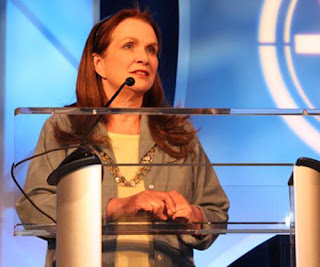 (Alexandria, Va) – Minutes after Elizabeth Edwards was presented with NHPCO’s Person of the Year Award, she took a moment at the podium to look at her notes as a shout came from the audience, “We love you!” A wide smile brightened her face as the audience of 1,600 broke out in spontaneous applause, filling the room with positive energy and optimism that was reinforced by Edwards’ remarks.
Edwards received NHPCO’s Person of the Year Award in recognition of her work as a fierce advocate for improved and accessible healthcare. In addition, she was acknowledged for her courage in the face of serious illness and life’s challenges and her willingness to share lessons learned from her experiences.
J. Donald Schumacher, NHPCO president/CEO, honored Edwards at the April 23rd opening session of the organization’s annual Management and Leadership Conference in Washington, DC.
The Person of the Year Award honors an individual outside of the hospice and palliative care community who is a true supporter of the hospice cause.
“Mrs. Edwards is rallying for changes to the healthcare system that will improve access, quality and—for those facing the end of life—comfort and dignity. Her personal experience in coping with cancer, caring for aging and ill parents, and her professional work in the legal and policy areas have made her a passionate proponent for change,” Schumacher said in his introduction.
A key message Edwards brought to the assembled leaders from hospice and palliative care programs across the nation was the obligation we all have of making sure that every American gets the care they need, when they need it, wherever they are.
Edwards stressed that an individual facing illness should never be defined by his/her medical condition. This philosophy—that puts the person at the center of care and emphasizes the dignity and individuality of all people—is one shared by hospice and palliative care providers.
A poignant moment came at the conclusion of her plenary address when she said she knew that one day she would need hospice care as a patient, and she thanked the attendees and all hospice professionals who care so compassionately for patients and families at the end of life.
She received a standing ovation and then graciously spent the next two hours signing autographs and copies of her book, Saving Graces: Finding Solace and Strength from Friends and Strangers.
Edwards served as the Honorary Chair of the National Hospice Foundation gala held the following Friday evening, which was attended by 600 guests. NHF’s annual gala is a philanthropic event supporting efforts to expand and improve care at the end of life.
As attention turns to the release of her new book and her publicized appearance on Oprah, NHPCO salutes Edwards for her efforts to advance care and compassion.

-###-
Contact:
 (Alexandria, Va) – Minutes after Elizabeth Edwards was presented with NHPCO’s Person of the Year Award, she took a moment at the podium to look at her notes as a shout came from the audience, “We love you!” A wide smile brightened her face as the audience of 1,600 broke out in spontaneous applause, filling the room with positive energy and optimism that was reinforced by Edwards’ remarks.
 Edwards received NHPCO’s Person of the Year Award in recognition of her work as a fierce advocate for improved and accessible healthcare. In addition, she was acknowledged for her courage in the face of serious illness and life’s challenges and her willingness to share lessons learned from her experiences.
J. Donald Schumacher, NHPCO president/CEO, honored Edwards at the April 23rd opening session of the organization’s annual Management and Leadership Conference in Washington, DC.
The Person of the Year Award honors an individual outside of the hospice and palliative care community who is a true supporter of the hospice cause.
“Mrs. Edwards is rallying for changes to the healthcare system that will improve access, quality and—for those facing the end of life—comfort and dignity. Her personal experience in coping with cancer, caring for aging and ill parents, and her professional work in the legal and policy areas have made her a passionate proponent for change,” Schumacher said in his introduction.
A key message Edwards brought to the assembled leaders from hospice and palliative care programs across the nation was the obligation we all have of making sure that every American gets the care they need, when they need it, wherever they are.
Edwards stressed that an individual facing illness should never be defined by his/her medical condition. This philosophy—that puts the person at the center of care and emphasizes the dignity and individuality of all people—is one shared by hospice and palliative care providers.
A poignant moment came at the conclusion of her plenary address when she said she knew that one day she would need hospice care as a patient, and she thanked the attendees and all hospice professionals who care so compassionately for patients and families at the end of life.
She received a standing ovation and then graciously spent the next two hours signing autographs and copies of her book, Saving Graces: Finding Solace and Strength from Friends and Strangers.
Edwards served as the Honorary Chair of the National Hospice Foundation gala held the following Friday evening, which was attended by 600 guests. NHF’s annual gala is a philanthropic event supporting efforts to expand and improve care at the end of life.
As attention turns to the release of her new book and her publicized appearance on Oprah, NHPCO salutes Edwards for her efforts to advance care and compassion.
-###-
Contact:
Jon Radulovic
Vice President, Communications
703-837-3139
For more information visit, http://www.nhpco.org
Tuesday, March 31, 2009
Join NHPCO for Capitol Hill Day

Capitol Hill Day Registration Deadline is April 1st
Remember your first day of school? No matter at what level – elementary school or college – most people would say that they felt a combination of excitement and anxiety. There’s the fear of saying the wrong thing, or going to the wrong place. For many, the idea of visiting Capitol Hill for meetings with Members of Congress and their staff can take you back to those first days of school – regardless if it is your first time, or if you are a seasoned veteran.
That’s why NHPCO has a new and improved Capitol Hill Day program planned for this year. We want our members armed and ready to go when they head to the Hill on April 22nd.
The enhanced Capitol Hill Day is designed for everyone, at every level of the hospice community. It is a busy time on Capitol Hill. Congressional offices see hundreds of constituents each week, advocating on behalf of diverse and pressing national issues. That is why it is crucial for us to make sure that we are maximizing our opportunities to emphasize the value of hospice during Hill Day, and throughout the year. The enhanced strategy sessions for messaging and meeting preparation have been designed to give us the unique and unified presence on Capitol Hill that we need to protect compassionate and quality end-of-life care for future generations. Capitol Hill Day promises to be an interactive, educational and fun experience for attendees!
Don’t miss out on Capitol Hill Day - registration ends at midnight on April 1st. There are just two more days left to sign up for this exciting opportunity. For more information on Hill Day, go to http://www.nhpco.org/i4a/pages/Index.cfm?pageID=5809.
If you have questions or need to change your MLC registration to attend Hill Day, please contact advocacy@nhpco.org.
###
For more information visit, http://www.nhpco.org
Tuesday, March 17, 2009
Elizabeth Edwards Opens NHPCO's 24th Management and Leadership Conference

Reforming Healthcare and Improving End-of-Life Care: Awakening Our National Conscience
Elizabeth Edwards is a strong and deeply committed advocate for improved and accessible healthcare. She was publicly introduced to America when her husband, then Vice-Presidential candidate John Edwards, was launched into the spotlight in 2004. But it was her down-to-earth personality that charmed America.
Living with Strength, Comfort and Dignity
Mrs. Edwards knows from firsthand experience the need for changes to the healthcare system that will improve access, quality, and – for those facing the end of life – comfort and dignity.
Her personal experience in coping with cancer, caring for aging and ill parents and her professional work in the legal and policy areas have made her a passionate proponent for change.
Strength for the Future from the Foundation of the Past
Mrs. Edwards stated: “It is a test of our characters, individually and communally, what we value and honor when facing the end of life. Individually we do well: hospice professionals, who are trained, do extraordinarily well and even those, like me, who stumble through, do as well as can be expected. Communally, particularly as a nation, we do less well. The regulatory limitations on reimbursement for hospice care under Medicare do not reflect our national will that the ends of life – and all our lives will end – be as comfortable and dignified as possible.”
At NHPCO's 24th Management and Leadership Conference, Mrs. Edwards will share her ideas, perspectives and passion for improving healthcare during the opening plenary session. She will encourage the hospice community to hold fast to the values that founded the modern hospice movement while challenging all to continue to be champions for those at the end of life.
Make plans today to attend the premier end-of-life leadership conference.
Make plans today to attend the premier end-of-life leadership conference.
Register today to experience this special plenary session and over 100 innovative sessions at the 24th MLC.
- Preconference Seminars: April 21-22, 2009
- Main Conference: April 23-25, 2009
- Location: Omni Shoreham Hotel, Washington, D.C.
For more information visit, http://www.nhpco.org
Subscribe to:
Posts (Atom)